

Page Updated:
Preservation Rhinoplasty in New York City: The Art and Science of the Natural Nose
Your nose is the central anchor of your face, and even the smallest adjustments can dramatically shift your overall appearance. For many patients in Manhattan and the greater New York area, the goal of a nose job is not to look like a different person, but to look like a more refined version of themselves. Dr. David L. Cangello is a board-certified plastic surgeon who specializes in preservation rhinoplasty, a revolutionary technique that prioritizes your natural anatomy to deliver elegant, natural-looking results.
As one of the first plastic surgeons in the United States to offer preservation rhinoplasty, Dr. Cangello has helped pioneer this innovative procedure. In addition to performing this technique clinically, he is frequently invited to lecture on preservation rhinoplasty and trains surgeons from around the world who travel to New York to learn his approach firsthand. While traditional rhinoplasty often involves removing or restructuring significant portions of the nasal bone and cartilage, preservation rhinoplasty focuses on maintaining as much of your native structure as possible. This approach results in a nose that looks and functions naturally, with significantly less downtime.
- The Art of Preservation: A Surgeon’s Aesthetic Vision
- What is Preservation Rhinoplasty?
- Preservation Rhinoplasty Vs. Traditional Rhinoplasty
- The Synergy of Piezo Ultrasonic Technology
- Benefits of the Preservation Approach
- Am I a Good Candidate for Preservation Rhinoplasty in NYC?
- Preparing for Your Preservation Rhinoplasty
- The Preservation Rhinoplasty Procedure: Step-by-Step
- The Recovery Timeline: What to Expect
- Frequently Asked Questions
- About Dr. David L. Cangello: Award-Winning Rhinoplasty Surgeon & Artist
The Art of Preservation: A Surgeon’s Aesthetic Vision
Dr. Cangello approaches every rhinoplasty as both a surgeon and an artist. He understands that a beautiful nose is not a “one-size-fits-all” shape, but one that harmonizes perfectly with your unique facial features. His artistic eye allows him to see the subtle nuances of facial balance, ensuring that your results look integrated and natural rather than “operated.”
“Preservation rhinoplasty is the ultimate expression of surgical artistry,” says Dr. Cangello. “It requires a deep understanding of the nose’s delicate architecture. By preserving the natural bridge and structural components, we are not just changing a shape, we are refining the existing beauty of the patient’s face.” This depth of understanding is what has led fellow surgeons worldwide to seek out Dr. Cangello for advanced training in preservation techniques.
What is Preservation Rhinoplasty?
Preservation rhinoplasty, also known as dorsal preservation rhinoplasty, is a modern philosophy in nose surgery. Instead of the “resection and reconstruction” model used in traditional methods, this technique aims to retain the patient’s existing bone and cartilage.1
During the surgical procedure, Dr. Cangello makes precise, minimal incisions to access the nasal structures. Rather than shaving down a dorsal hump from the top, which can disrupt the natural aesthetic lines of the bridge, he removes small amounts of bone and cartilage from deeper within the nose. This allows the bridge to be gently pushed down or “let down” into a lower, smoother position, while keeping the top of the bridge, the dorsum, completely intact.
Watch Dr. Cangello Explain Preservation Rhinoplasty
Preservation Rhinoplasty Vs. Traditional Rhinoplasty
There are several key surgical techniques that set preservation rhinoplasty apart from traditional rhinoplasty and offer potential benefits to patients.
A More Natural Look with Preservation Rhinoplasty
In a traditional rhinoplasty surgery, the surgeon reduces the height of the nasal bridge by removing cartilage and bone from the top. In some cases, the dorsum may not be fully reconstructed after this removal, which can make it difficult to maintain the natural width and contour of the bridge. This approach may result in a dorsum that appears overly narrow or irregular and, in certain situations, can contribute to functional concerns if the upper lateral cartilages lose support, leading to narrowing of the internal nasal valve. These changes may present as an inverted “V” deformity or other contour irregularities of the nasal dorsum.
Preservation rhinoplasty removes tissue from deeper within the nose, preserving the native dorsal aesthetic lines and structural relationships that make your nose look like yours. By maintaining the natural support of the upper lateral cartilages and internal nasal valve, this approach helps protect both the appearance and function of the nose, avoiding many of the aesthetic and structural challenges associated with traditional or structural rhinoplasty.
Enhanced Breathing Function
Traditional methods can sometimes compromise the functional nasal structures necessary for proper airflow, requiring complex reconstructive surgery. Preservation techniques maintain the integrity of the nasal valves and internal structures. This significantly reduces the risk of long-term breathing problems after surgery and preserves optimal breathing function.
Optimized Recovery and Healing
Preservation rhinoplasty is performed in a different plane of dissection, specifically the subperichondria or supraperichondrial and subperiosteal planes. This means the soft tissue, blood vessels, and lymphatics remain largely preserved and undisturbed. Patients undergoing these surgical techniques often experience minimal swelling and bruising, allowing them to return to their normal lives much faster than with a typical rhinoplasty procedure.
The Synergy of Piezo Ultrasonic Technology
To further enhance precision, Dr. Cangello often utilizes Piezo Ultrasonic Rhinoplasty in conjunction with preservation cases. This advanced technology uses ultrasonic vibrations to reshape nasal bones with millimeter precision without damaging the surrounding soft tissues.
By combining the preservation philosophy with Piezo technology, Dr. Cangello can sculpt the bone with incredible detail. This synergy results in smoother contours, less trauma to the nose, and more predictable rhinoplasty results. He also utilizes a powered cylindrical burr to refine bone contours, achieving a level of detail that surpasses traditional manual tools.
Benefits of the Preservation Approach
Patients who choose preservation rhinoplasty with Dr. Cangello in Manhattan enjoy several distinct advantages:
- Structural Integrity: Maintains the natural structure and support of the nose.
- Refined Results: Bumps or humps are reduced while the bridge of the nose remains smooth and intact.
- Reduced Trauma: Less swelling and bruising compared to traditional rhinoplasty.
- Faster Recovery: Most patients appear fully recovered with natural-looking results within just a few weeks.
- Natural Identity: Enhances your facial features while preserving your unique facial identity and harmony, because the native dorsum is left intact. Rather than removing the bridge and attempting to reconstruct it, the bridge is gently lowered and flattened when a hump or bump is present—maintaining the original structure that cannot be perfectly recreated once removed.
Am I a Good Candidate for Preservation Rhinoplasty in NYC?
Preservation rhinoplasty is an excellent option for many patients, but it is not a one-size-fits-all solution. A good candidate typically includes:
- Individuals looking to reduce a dorsal hump or decrease the projection of the nose.
- Patients who have not had a previous rhinoplasty (primary rhinoplasty).
- Patients with well-defined dorsal aesthetic lines and a naturally attractive dorsum who require removal of a hump and/or an overall reduction in the size of the nose.
- Those with a relatively straight nasal bridge that simply needs to be lowered.
- Healthy non-smokers with realistic expectations for their desired results.
During your rhinoplasty consultation in our New York City office, Dr. Cangello will perform a thorough examination of your nasal anatomy and breathing function to determine if this approach is right for you.
Preparing for Your Preservation Rhinoplasty
Preparation is key to a smooth surgical experience and optimal rhinoplasty results. During your rhinoplasty consultation at our Park Avenue office, Dr. Cangello will provide a personalized treatment plan and detailed pre-operative instructions.
- Medical Evaluation: A thorough physical examination and review of your medical history will be conducted to ensure you are a good candidate for surgery.
- Medication Adjustments: You must avoid blood-thinning medications and supplements, such as aspirin, ibuprofen, vitamin E, and fish oil, for at least two weeks prior to surgery to minimize the risk of bleeding.
- Smoking Cessation: If you smoke, you must stop at least two weeks before and after surgery, as nicotine impairs blood flow and can significantly delay the healing process.
- Logistics: Arrange for a responsible adult to drive you home after the procedure and stay with you for the first 24 hours.
- Recovery Planning: Plan to take at least 7 to 10 days off from work or school to allow your body to rest and heal.
The Preservation Rhinoplasty Procedure: Step-by-Step
Dr. Cangello performs preservation rhinoplasty as an outpatient procedure, typically taking about two to three hours depending on the complexity of the case.
Step 1: Anesthesia
Intravenous Anesthesia (TIVA). Patients are fully asleep throughout surgery, with airway protection provided via a laryngeal mask airway (LMA) or endotracheal intubation.
Dr. Cangello does not perform rhinoplasty under local anesthesia or IV sedation alone. Rhinoplasty is a complex structural operation, and performing it without full anesthesia and airway control is not considered safe. Using TIVA allows for a controlled, motionless surgical field, precise execution of advanced preservation techniques, and the highest level of patient safety.
Step 2: The Incision
Dr. Cangello selects either an open or closed rhinoplasty approach depending on each patient’s unique nasal anatomy, surgical goals, and the specific preservation techniques being used.
An open rhinoplasty approach involves a small incision across the columella (the tissue between the nostrils), allowing direct visualization of the nasal structures. This approach can be beneficial when precise structural modification or detailed tip refinement is required.
A closed rhinoplasty approach, in contrast, uses incisions hidden entirely within the nostrils. When appropriate, this method allows Dr. Cangello to perform preservation rhinoplasty without any external incisions, often with reduced swelling and faster early recovery.
By tailoring the surgical approach rather than defaulting to a single technique, Dr. Cangello is able to maximize precision while respecting the natural anatomy of the nose.
Step 3: Preservation of the Dorsal Structure
Unlike structural (component separation) rhinoplasty—which involves separating and reconstructing the elements that form the nasal dorsum—preservation rhinoplasty is specifically designed to avoid dismantling these components.
In preservation rhinoplasty, the natural dorsal structure is intentionally left intact. Rather than separating and rebuilding the cartilaginous and bony elements of the bridge, Dr. Cangello works beneath the dorsum to lower it as a unified structure, maintaining the native relationships between bone, cartilage, and soft tissue.
This distinction is fundamental: component separation is a cornerstone of structural rhinoplasty, whereas preservation rhinoplasty achieves refinement without taking the dorsum apart and attempting to reconstruct it. By keeping these structures connected, the nose retains its original character, strength, and functional integrity—while still allowing for precise aesthetic improvement.
Step 4: Dorsal Lowering Through Preservation
With the dorsal structure preserved as a single, intact unit, Dr. Cangello carefully lowers the nasal bridge by removing small, precise amounts of bone and cartilage from deeper within the nose. Using specialized instruments, including Piezo ultrasonic technology when appropriate, this controlled reduction allows a dorsal hump to be reduced without separating, breaking, or reconstructing the natural “roof” of the nose.
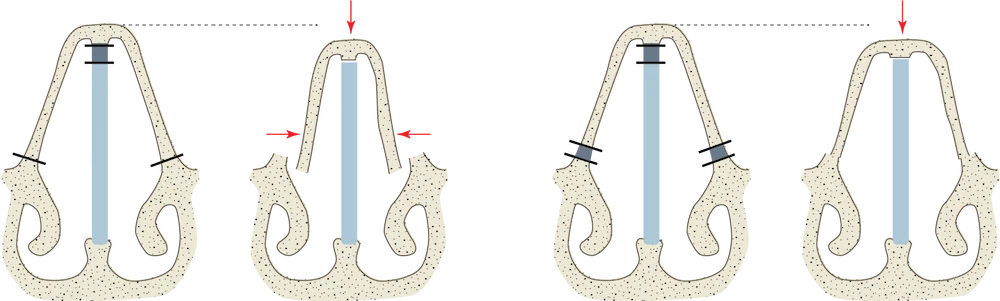
By lowering the dorsum rather than dismantling it, the original dorsal aesthetic lines, structural continuity, and functional support of the nose are maintained—while achieving a smoother, more refined profile.
Step 5: Tip Refinement and Closure
If needed, the nasal tip is refined using sutures and delicate cartilage grafting to achieve the desired projection and definition. The incisions are then meticulously closed with fine sutures.
Step 6: Splinting
A small external splint is applied to the bridge of the nose to protect the new structure and minimize swelling during the initial phase of recovery.
The Recovery Timeline: What to Expect
Because preservation rhinoplasty is performed using specialized dissection planes—specifically the subperichondrial and subperiosteal planes—along with advanced instrumentation such as Piezo ultrasonic technology and powered burrs, trauma to the soft tissues is minimized. As a result, the post-operative process is generally smoother than with traditional nose surgery.
- Days 1-5: You may experience mild discomfort and some puffiness. Keeping your head elevated is essential.
- Week 1: Most patients feel well enough to return to work or school. Dr. Cangello will typically remove any external splints at the end of the first week.
- Weeks 2-4: Swelling continues to subside rapidly. You can gradually resume light exercise, though strenuous activities should be avoided for at least four weeks.
- Follow-up: Dr. Cangello will schedule regular follow-up appointments to monitor your healing and ensure you are on track for your aesthetic goals.
- 6-12 Months: Your final rhinoplasty results will emerge as the last traces of internal swelling resolve.
Frequently Asked Questions About Preservation Rhinoplasty
How is preservation rhinoplasty performed?
It is typically an outpatient procedure performed under general anesthesia. Dr. Cangello uses a “let-down” or “push-down” technique to lower the bridge from the base, meticulously preserving the entire dorsum and in particular “the keystone area” which is vital for structural stability. He may also perform a septoplasty to correct any septum deformities or breathing problems.
Are there risks associated with this procedure?
As with any surgical procedure, risks include infection, bleeding, or minor asymmetry. However, because the natural structure is preserved, the risk of long-term structural collapse or breathing problems is often lower than with traditional methods.
How long do the results last?
The results of preservation rhinoplasty are permanent. While your face will continue to age naturally, the structural changes made to your nose will last a lifetime.
Where can I find preservation rhinoplasty near me?
Dr. David L. Cangello is an elite rhinoplasty surgeon who offers preservation rhinoplasty at his practice in Manhattan, New York. As a pioneer of preservation rhinoplasty in New York City—and one of the first surgeons in the United States to perform this technique— he brings a level of expertise and artistic vision focused on achieving natural-looking, functional results tailored to each patient’s unique facial features.
Can I combine any other treatments with preservation rhinoplasty?
Yes. Many patients choose to combine their nose surgery with a septoplasty to improve nasal breathing. Others may opt for a facelift, chin augmentation, or eyelid surgery to achieve total facial harmony. Dr. Cangello also specializes in ethnic rhinoplasty and revision rhinoplasty for those who have had unsatisfactory results from a previous nose job.
About Dr. David L. Cangello: Award-Winning Rhinoplasty Surgeon & Artist
David L. Cangello, M.D., F.A.C.S. is a double board-certified plastic surgeon specializing in rhinoplasty and facial plastic surgery. Known for his meticulous attention to detail and innate sense of aesthetics, Dr. Cangello is widely regarded as one of New York City’s premier nose surgery specialists.
- Newsweek Best Rhinoplasty Surgeon (2025): Recently honored as one of America’s Best Rhinoplasty Surgeons.
- Member of The Rhinoplasty Society: One of only ~139 surgeons worldwide who specialize exclusively in nose surgery.
- Fellow of the American College of Surgeons (FACS): Demonstrates a commitment to surgical excellence and patient safety.
- International Lecturer & Surgical Educator: Regularly lectures on preservation rhinoplasty and trains surgeons from across the U.S. and around the world in advanced nasal preservation techniques.
- Pioneer in Preservation: One of the first surgeons in the United States to perform and teach preservation rhinoplasty techniques.
Education & Training:
- Master of Science: Johns Hopkins University
- Medical Degree: SUNY Upstate Medical University at Syracuse
- General Surgery Residency: Lenox Hill Hospital, New York
- Plastic & Reconstructive Surgery Residency: Temple University Hospital, Philadelphia
- Fellowship in Cosmetic Surgery: Temple University Hospital
Hospital Affiliations:
- Lenox Hill Hospital, New York
- NewYork-Presbyterian/Lower Manhattan Hospital
- Manhattan Eye, Ear, and Throat Hospital
“Dr. Cangello is the Michelangelo of plastic surgeons. His aesthetic precision is unmatched. I recently underwent a rhinoplasty and was overjoyed with the outcome. At the consultation, Dr. Cangello rendered a freehand before and after drawing as he explained the procedure. I was amazed at the drawing’s accuracy and sculptural shading. I knew I was in good hands, as Dr. Cangello is more than a plastic surgeon- he is a truly gifted artist. The results were accurate and even exceeded my expectations. I would highly recommend Dr. Cangello.” – M. ⭐⭐⭐⭐⭐
“Honestly best decision of finding a surgeon to do my rhinoplasty. I was insecure about my nose for years & as I got older I finally wanted to do something about it, just didn’t know who to see or where to get it done. A patient told me about Dr. Cangello and showed me her results & I trusted her so I went for the consult. Dr. Cangello has excellent bedside manner. My surgery was quick & my healing went well with his post op directions and a year later, I have the nose I always wanted! Thank you Doc!” – M.L. ⭐⭐⭐⭐⭐
“What a DREAM COME TRUE!!! I did a rhinoplasty 3 months ago and enjoying every moment of my life with the pretty nose. I’ve been searching for the right doctor since I was in my early 20’s and finally found Dr Cangello who knew exactly what I wanted, My nose looks super cute, feminine and yet very natural! I never thought it was possible. Highly recommend Dr Cangello to anyone who wants to achieve a phenomenal result!” – A.O. ⭐⭐⭐⭐⭐
“I recently had nose surgery with Dr. Cangello, and it was an exceptional experience. The recovery was surprisingly fast, and I experienced no pain at all. The staff was incredibly friendly, creating a positive atmosphere. Most importantly, he listened to my preferences and delivered exactly what I asked for!! Highly recommend for a top-notch and personalized service.” – D.E. ⭐⭐⭐⭐⭐
Contact Us
Ready to achieve your ideal nose? Schedule your private rhinoplasty consultation with Dr. Cangello today.
1 Daniel RK, Kosins AM. Current Trends in Preservation Rhinoplasty. Aesthet Surg J Open Forum. 2020 Feb 1;2(1):ojaa003. doi: 10.1093/asjof/ojaa003. PMID: 33791623; PMCID: PMC7671258.
2 The Rhinoplasty Society. Preservation Rhinoplasty. Available: https://rhinoplastysociety.org/procedures/surgical-rhinoplasty/preservation-rhinoplasty-international. Accessed February 24, 2023.