






Key Summary: Cobra neck deformity is a surgical complication — not a natural aging change — that can occur after a poorly performed facelift or neck lift. It produces a central hollow beneath the chin with lateral fullness on either side, and it will not resolve on its own. It is correctable through revision surgery performed by a board-certified plastic surgeon with expertise in neck anatomy, and Dr. David L. Cangello, MD, FACS has been doing exactly that from his Manhattan practice for over 15 years.
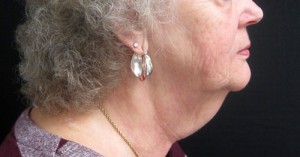
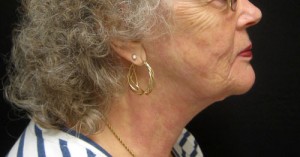
Cobra neck deformity is a recognized complication that can follow a facelift or neck lift performed in New York, NYC, or anywhere else. It produces a specific contour abnormality: central hollowing beneath the chin paired with fullness or sagging on either side of the midline. The resulting silhouette resembles the flared hood of a cobra snake — which is where the name originates.
At his Manhattan practice, Dr. David L. Cangello evaluates patients with cobra neck deformity and develops individualized surgical plans to restore a smooth, natural neck contour.
Cobra neck deformity is a specific type of post-surgical contour abnormality. It is not an inevitable result of aging, and it is not something most patients expect when they pursue neck rejuvenation. It is a complication — one that signals the structural anatomy of the neck was not adequately addressed during the original procedure.
The condition does not improve with time. Swelling resolves, but the underlying structural problem remains. Correction requires revision surgery.
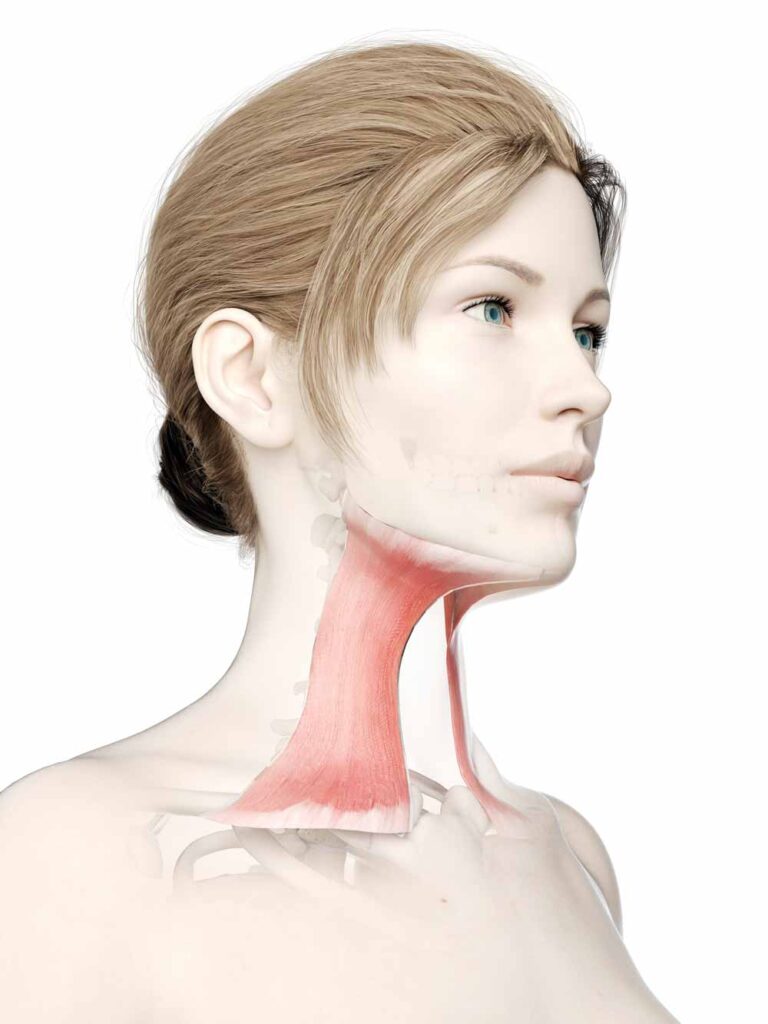
Understanding cobra neck deformity starts with the anatomy of the neck itself. The platysma is a thin, broad sheet of muscle that spans the front of the neck, running from the collarbones up to the lower face. It has 2 medial borders that run toward the midline. With age, these borders separate and descend, producing the vertical bands and softened jawline that lead many patients in New York and Manhattan to consider neck rejuvenation surgery.
Effective neck lift surgery requires directly repairing the platysma through a technique called platysmaplasty — bringing the separated medial edges back together to restore midline support. Surgeons must also carefully manage subplatysmal fat, the deeper fat layer located beneath the muscle itself.
According to a review published in StatPearls via the National Library of Medicine, the neck contains 3 anatomical layers and 3 distinct aesthetic subunits. A thorough knowledge of this structure is essential for any surgeon performing neck rejuvenation — and even more critical for the surgeon correcting what a previous procedure left behind.
Call us at (646) 733-4696 or book online to schedule a consultation with Dr. Cangello
Cobra neck deformity results from specific technical errors made during a facelift or neck lift. A peer-reviewed PMC study on revision facelift and neck lift surgery identifies the condition as a complication arising from overly aggressive submental liposuction and defatting, which leads to scarring and a central depression. The most common contributing causes include:
Patients with cobra neck deformity typically notice the following after a facelift or neck lift:
These signs are distinct from the normal appearance of an aging neck. If you are experiencing any of them following a procedure performed in New York City, Manhattan, or elsewhere, a consultation with Dr. Cangello can help determine whether revision surgery is appropriate.
Revision surgery is the only reliable path to correcting cobra neck deformity. The appropriate approach depends on the original procedure performed, the degree of deformity, and the patient’s individual anatomy. Dr. Cangello evaluates each patient in a personal consultation before recommending a plan.
The anterior platysmal bands are identified and the separated medial muscle edges are repaired and tightened in the midline. Excess lateral fat is addressed at the same time to rebalance the overall contour. The PMC revision facelift and neck lift review confirms that corset platysmaplasty with sufficient undermining of the tissue and redraping of skin can correct cobra neck deformity and related submental contouring complications.
For patients whose deformity involves the lateral face as well as the neck, a revision facelift may be incorporated. Dr. Cangello specializes in the deep plane facelift — a technique that works beneath the surface to reposition anatomical structures rather than relying on skin tension alone. This makes it particularly well-suited to revision cases, where surface-only corrections routinely underperform.
When central hollowing is significant, facial fat transfer can restore volume to the submental region. Fat is harvested from a donor site such as the abdomen or flanks and carefully reinjected to fill the depression. Because the transferred fat establishes a new blood supply in the recipient area, results are long-lasting. Dr. Cangello trained under Dr. Sydney Coleman — one of the pioneers of the fat grafting technique — and has extensive experience using fat transfer as an adjunct to facial rejuvenation.
In some cases, a combination of revision neck lift, facelift, and fat grafting addresses all components of the deformity in a single surgical session. Dr. Cangello will discuss the most appropriate plan based on your specific anatomy and goals.
Revision neck surgery requires a different level of expertise than primary procedures. Scar tissue, altered anatomy, and structural deficiencies left by a previous surgeon all increase technical difficulty. Dr. Cangello brings the following qualifications to every revision case:
Dr. Cangello’s approach prioritizes anatomical precision and aesthetic balance. The goal is always a result that looks natural — not corrected.
Cobra neck deformity is a recognized complication but not an inevitable outcome. It typically results from specific technical errors — most often over-aggressive fat removal combined with inadequate platysma repair. When neck surgery is performed by an experienced, board-certified plastic surgeon who addresses all layers of the neck anatomy, the risk is significantly reduced.
No. The deformity is structural — caused by tissue over-resection and inadequate muscular repair. It does not resolve as healing progresses. Revision surgery is the only reliable path to correction.
Most surgeons recommend waiting at least 6 to 12 months after the original procedure. This allows swelling to fully resolve and the tissues to stabilize, giving Dr. Cangello the most accurate picture of the anatomy before planning correction.
Platysmaplasty repairs and tightens the platysma muscle — the thin sheet of muscle spanning the front of the neck. It is the cornerstone of effective neck lift surgery and of cobra neck correction. Without properly addressing the platysma, neck rejuvenation results are incomplete and prone to complications like cobra neck deformity.
Revision neck lift surgery uses incisions positioned to minimize visible scarring — typically placed behind the ear, along the hairline, and in a small submental crease beneath the chin where needed. Dr. Cangello places incisions carefully to keep them as inconspicuous as possible. Any new scarring is generally well-concealed and fades over time.
They are related but distinct. Platysma banding refers to visible vertical cords that appear when the medial edges of the platysma separate — a common sign of neck aging. Cobra neck deformity is a specific post-surgical complication characterized by central depression and lateral fullness. Persistent platysma bands may accompany the deformity, but their presence alone does not define it.
Fat grafting can address the central hollowing component by restoring volume to the submental region. However, if lateral fullness or platysma banding is also present, fat grafting alone will not fully correct the deformity. Most cases require revision platysmaplasty — sometimes combined with fat grafting — to achieve a balanced, smooth result.
If you are concerned about the appearance of your neck following a previous facelift or neck lift — whether performed in Manhattan, New York City, or elsewhere — Dr. Cangello can evaluate your anatomy and discuss your correction options.
Contact Cangello Plastic Surgery at (212) 644-4416 or schedule a consultation online. The consultation fee starts at $350. Cangello Plastic Surgery is located at 30 E. 60th Street, Suite 2501, Manhattan, New York, NY 10022.
While revision neck lift surgery is considered safe, it does, as with any cosmetic procedure, carry some potential risks and side effects which may include but are not limited to: infection, bleeding, scarring, asymmetry, changes in skin sensation, prolonged swelling or bruising, contour irregularities, anesthesia-related complications, and the need for additional revision procedures.
Sources