
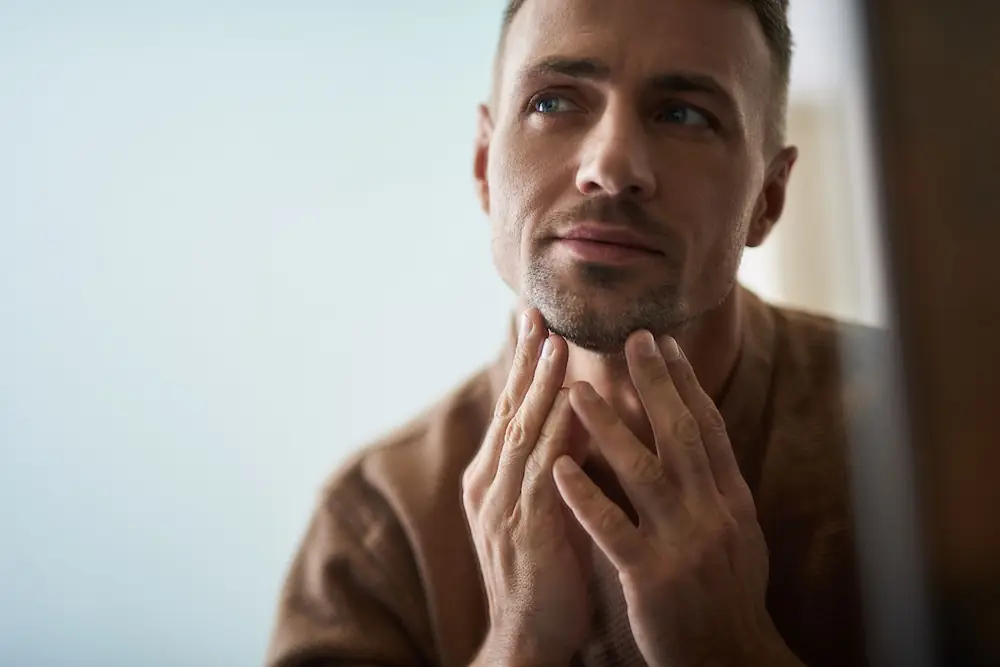
You reached your goal weight on a GLP-1 medication like Ozempic®. Your clothes fit better, and your health has improved. But your face now looks thinner, more tired, and older than you expected. This change is common enough that patients and physicians now call it Ozempic face.
Board-certified plastic surgeon Dr. Cangello treats Ozempic face for patients in New York City at Cangello Plastic Surgery in Manhattan. His approach restores lost volume and lift, so you look like a rested, natural version of yourself.
What Is Ozempic Face?
Ozempic face is a hollow, sagging, or aged look that can follow significant weight loss on GLP-1 medications. These include Ozempic, Wegovy®, and Mounjaro®. It is an everyday term, not a medical diagnosis. The same changes can follow bariatric surgery or any fast weight loss.
The medication does not damage your face. The changes happen because your body loses facial fat along with fat everywhere else.
What Causes Ozempic Face?
Your face depends on fat for its shape. Small pads of fat sit in your cheeks, temples, under-eye area, and jawline. Together, they support your skin and give your face a full, youthful contour. When those fat pads shrink, 2 changes follow:
- Volume loss: Your cheeks, temples, and under-eye area look hollow or sunken.
- Loose skin: Skin that once stretched over fuller fat pads loses its support and begins to sag.
Speed plays a role. Skin needs time to tighten after weight loss, and GLP-1 medications can take weight off faster than skin can adjust.
Age plays a role too. Your skin makes less collagen, the protein that keeps it firm, as you get older. Many patients over 40 see more noticeable facial changes than younger patients who lose the same amount of weight.
What Does Ozempic Face Look Like?
Ozempic face looks different from person to person. Common signs include:
- Hollow cheeks and temples
- Deeper smile lines between the nose and the corners of the mouth
- Sagging skin along the jawline, often called jowls
- Sunken or shadowed hollows under the eyes
- A thinner, flatter upper lip
- Loose skin on the neck
These changes do not mean your weight loss went wrong. They are a predictable result of losing fat from an area that depends on volume for its shape.
How Do You Fix Ozempic Face?
Fixing Ozempic face means treating 2 concerns: lost volume and loose skin. Many patients have some of both. During your consultation, Dr. Cangello examines your face to see which concern leads. He then builds a plan that restores balance without an overfilled or pulled look.
Dermal Fillers for Mild Volume Loss
Dermal Fillers add volume back to areas that have hollowed. Dr. Cangello uses hyaluronic acid fillers such as Juvéderm® and Restylane® to restore the cheeks, temples, and jawline. For hollows under the eyes, Tear Trough Filler softens a sunken, tired look.
You see results right away, and many patients return to normal activities the same day. Results last 6 months or longer, depending on the product and area treated. Dr. Cangello can dissolve hyaluronic acid filler if you ever want to reverse it.
Placement matters as much as the product. Filler in the wrong layer, or too much of it, looks puffy or artificial. Dr. Cangello performs every injection himself, guided by a detailed knowledge of facial anatomy.
Facial Fat Transfer for Deeper Hollowing
When volume loss runs deeper, Facial Fat Transfer offers a permanent option. Dr. Cangello removes a small amount of fat from your abdomen, flanks, or inner thighs. He purifies the fat and places it into the areas that have lost fullness.
Because the fat is your own tissue, it blends naturally with your face. Your body reabsorbs some of the fat as you heal, so some patients benefit from a second session. The fat that remains becomes a permanent part of your face. Facial Fat Transfer works on its own or alongside a Facelift.
Facelift for Sagging Skin
Volume alone cannot correct loose, sagging skin. When jowls and jawline laxity are your main concern, a Facelift lifts the deeper tissues of the face and removes excess skin. Dr. Cangello offers 3 Facelift approaches:
- Mini Facelift: Corrects early sagging along the lower face and jawline.
- Full Facelift/SMAS Lift: Lifts moderate sagging of the cheeks, jowls, and jawline.
- Deep Plane Facelift: Addresses advanced sagging and a flattened midface.
The Deep Plane Facelift lifts the deepest layers of the face. It returns cheek tissue that has fallen after weight loss to its natural position. This makes it a strong fit for many patients with pronounced Ozempic face.
A Facelift repositions tissue, but it does not replace lost fat. For this reason, Dr. Cangello often pairs a Facelift with Facial Fat Transfer.
Eyelid Lift, Brow Lift, and Neck Lift
Weight loss rarely affects only one area. An Eyelid Lift (Blepharoplasty) removes excess eyelid skin and smooths lower-lid hollows for a more rested look. A Brow Lift raises brows that have dropped and made the upper face look heavy.
The neck can show loose skin early, a change many patients call “Ozempic neck.” A Neck Lift tightens the skin and muscle from the jawline to the collarbone. Dr. Cangello often combines these procedures with a Facelift and Facial Fat Transfer for a balanced result.
While Dermal Fillers, Facial Fat Transfer, Facelift, Eyelid Lift, Brow Lift, and Neck Lift are considered safe, they do, as with any cosmetic procedure, carry some potential risks and side effects which may include but are not limited to: swelling, bruising, infection, scarring, asymmetry, changes in skin sensation, and the need for revision surgery.
When Should You Treat Ozempic Face?
The best time to treat Ozempic face is after your weight has stabilized. If you are still losing weight, your face is still changing. A result that looks balanced today may look different after another 20 pounds.
Dr. Cangello recommends holding a stable weight for several months before surgery or significant filler treatment. If you plan to stay on your GLP-1 medication, talk with your prescribing physician about your long-term goals. That plan helps Dr. Cangello time your treatment.
How Can You Avoid Ozempic Face?
No habit fully prevents facial changes after major weight loss. These steps can reduce them, especially when you start early:
- Lose weight gradually: A slower pace gives your skin time to adjust. Ask your prescriber whether your dosing plan allows it.
- Eat enough protein: Protein supports collagen and helps you keep muscle while you lose fat.
- Strength train: Resistance exercise protects muscle mass during weight loss.
- Wear sunscreen daily: Sun exposure breaks down collagen and speeds skin aging.
- Avoid smoking: Nicotine damages collagen and slows healing after any procedure.
Why NYC Patients Choose Dr. Cangello for Ozempic Face Treatment
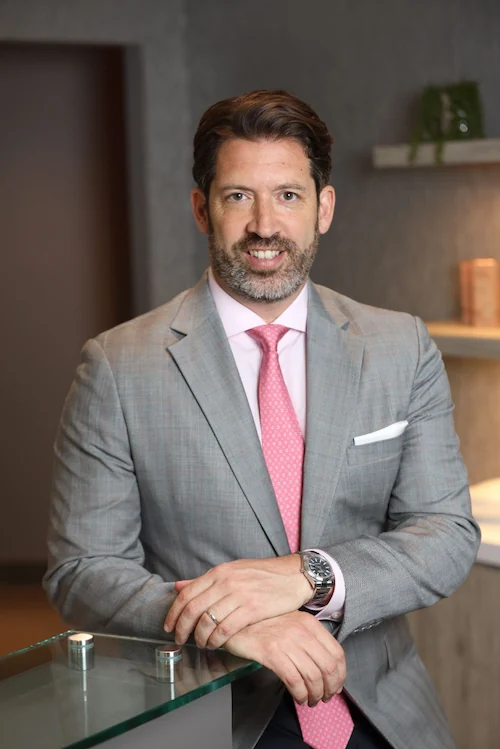
Dr. Cangello is a board-certified plastic surgeon with over 15 years of private practice experience. He performs every procedure at Cangello Plastic Surgery himself, from filler injections to Deep Plane Facelift surgery. The same expert guides your plan from consultation through recovery.
Dr. Cangello brings specialized training to Facial Fat Transfer. He shared a practice for 2 years with Dr. Sydney Coleman, a pioneer of modern fat grafting. Dr. Cangello continues to perform fat transfer using the technique Dr. Coleman developed. He also co-authored the chapter on fat grafting of liposuction deformities in Dr. Coleman’s textbook, Fat Injection from Filling to Regeneration.
Dr. Cangello views plastic surgery as the intersection of science and art. Restoring a face after weight loss takes judgment as well as technical skill. He decides how much volume to restore, where to place it, and when a lift is needed. The goal is a face that looks like a rested, natural version of you.
David L. Cangello, MD, FACS holds these credentials and honors:
- Board-Certified by the American Board of Plastic Surgery
- Fellow of the American College of Surgeons (FACS)
- Assistant Professor of Surgery, Weill Cornell Medicine / New York Presbyterian
- Castle Connolly America’s Top Doctors (multiple years)
- New York Times “Super Doctor”
- Newsweek Best Rhinoplasty Surgeon (2025)
Frequently Asked Questions About Ozempic Face
Does Ozempic face go away on its own?
Usually not. Lost facial fat returns only if you regain weight, which defeats the purpose of your weight loss. Loose skin also does not fully tighten on its own, especially after age 40. Lasting improvement comes from restoring volume, lifting loose skin, or both.
Does everyone who takes a GLP-1 medication get Ozempic face?
No. Your risk depends on how much weight you lose, how quickly you lose it, your age, and your skin quality. Genetics and past sun damage also play a role. A younger patient who loses 20 pounds may see little change. An older patient who loses 60 pounds may notice significant hollowing.
Do Zepbound® and Mounjaro cause Ozempic face too?
Yes, they can. Zepbound and Mounjaro contain tirzepatide, while Ozempic and Wegovy contain semaglutide. Any medication that causes significant fat loss can produce the same facial changes. The name describes the look, not a specific drug.
Do I need to stop Ozempic before surgery?
You may need to pause it. GLP-1 medications slow digestion, which can raise the risk of complications under anesthesia. Dr. Cangello and your prescribing physician decide together whether you should pause and for how long. Do not stop or change your dose without guidance from your prescribing physician.
Will my results last if my weight changes after treatment?
Significant weight changes after treatment can affect your results. More weight loss can thin transferred fat and loosen lifted skin again. Weight gain can make treated areas look overly full. Holding a stable weight is the best way to protect your results.
Schedule an Ozempic Face Consultation in Manhattan
If weight loss has left your face looking hollow or tired, Dr. Cangello can help you restore a fuller, more rested look. Schedule a Consultation at Cangello Plastic Surgery in Manhattan to learn which approach fits your face and your goals.